
Air Pre Heater
Waste Heat Recovery for Improved Boiler & Furnace Efficiency
What Is an Air Preheater?
An Air Preheater is a heat exchanger installed in the flue-gas and combustion-air path of a boiler or furnace.
It transfers heat from hot exhaust gases to fresh combustion air before the air enters the combustion chamber. This heat-recovery process reduces energy loss and can improve the thermal performance of industrial heating equipment.
How Does an Air Preheater Work?
1. Hot Flue Gas
Hot flue gases leave the boiler or furnace.
2. Flue Gas Entry
The exhaust gases enter the Air Preheater.
3. Combustion Air Entry
Fresh air enters through the combustion-air supply system.
4. Heat Transfer
Heat transfers from the hot flue gas to the incoming combustion air.
5. Preheated Air
The heated combustion air flows toward the burner or combustion chamber.
6. Reduced Flue Gas Temperature
The flue gas leaves the preheater at a lower temperature, subject to the system design.
Types of Air Pre Heaters
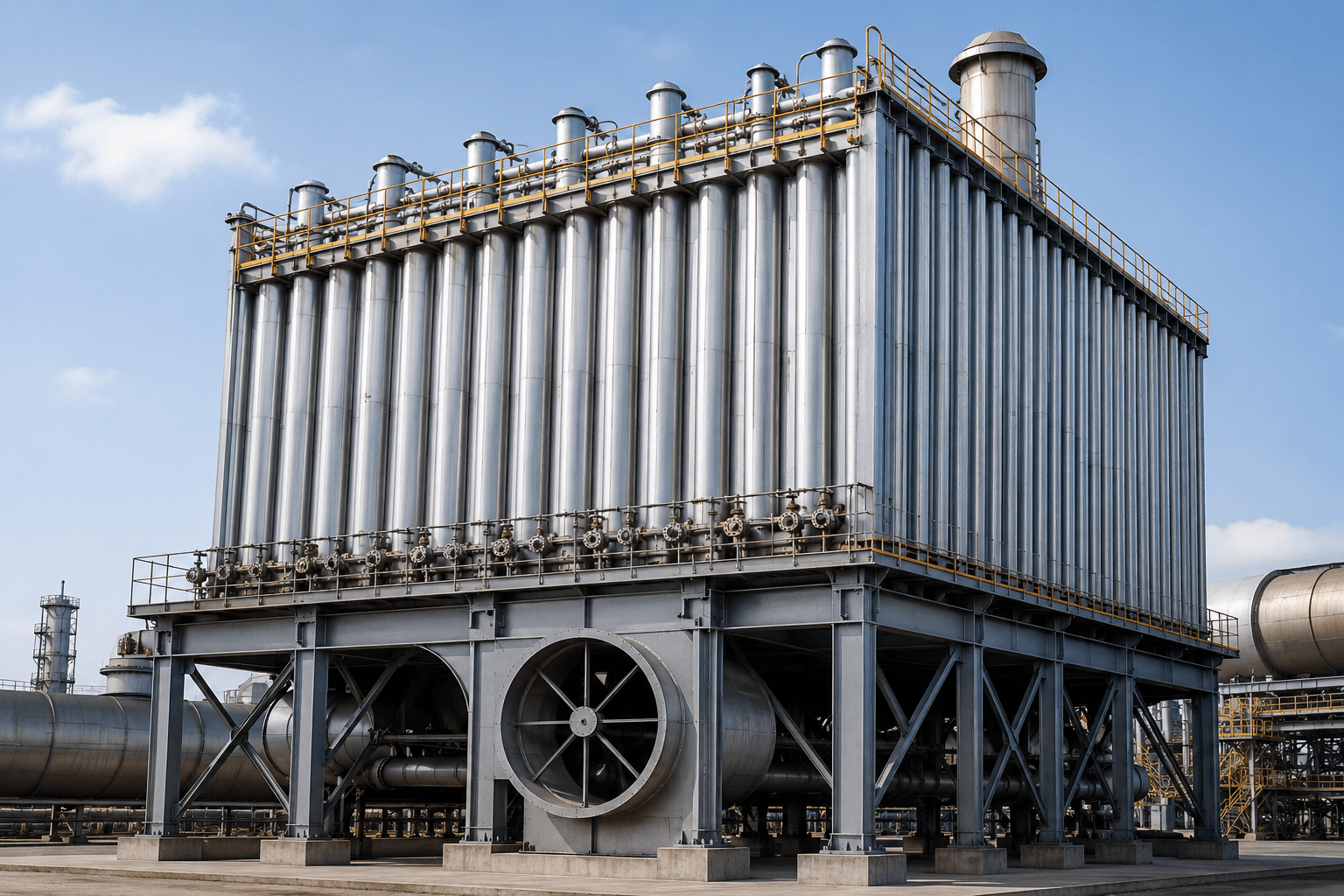
Tubular Air Pre Heater
A tubular or recuperative air preheater transfers heat through tubes separating the flue gas and air streams. It is suitable for small- to medium-scale industrial applications and offers a relatively simple construction with easy maintenance.
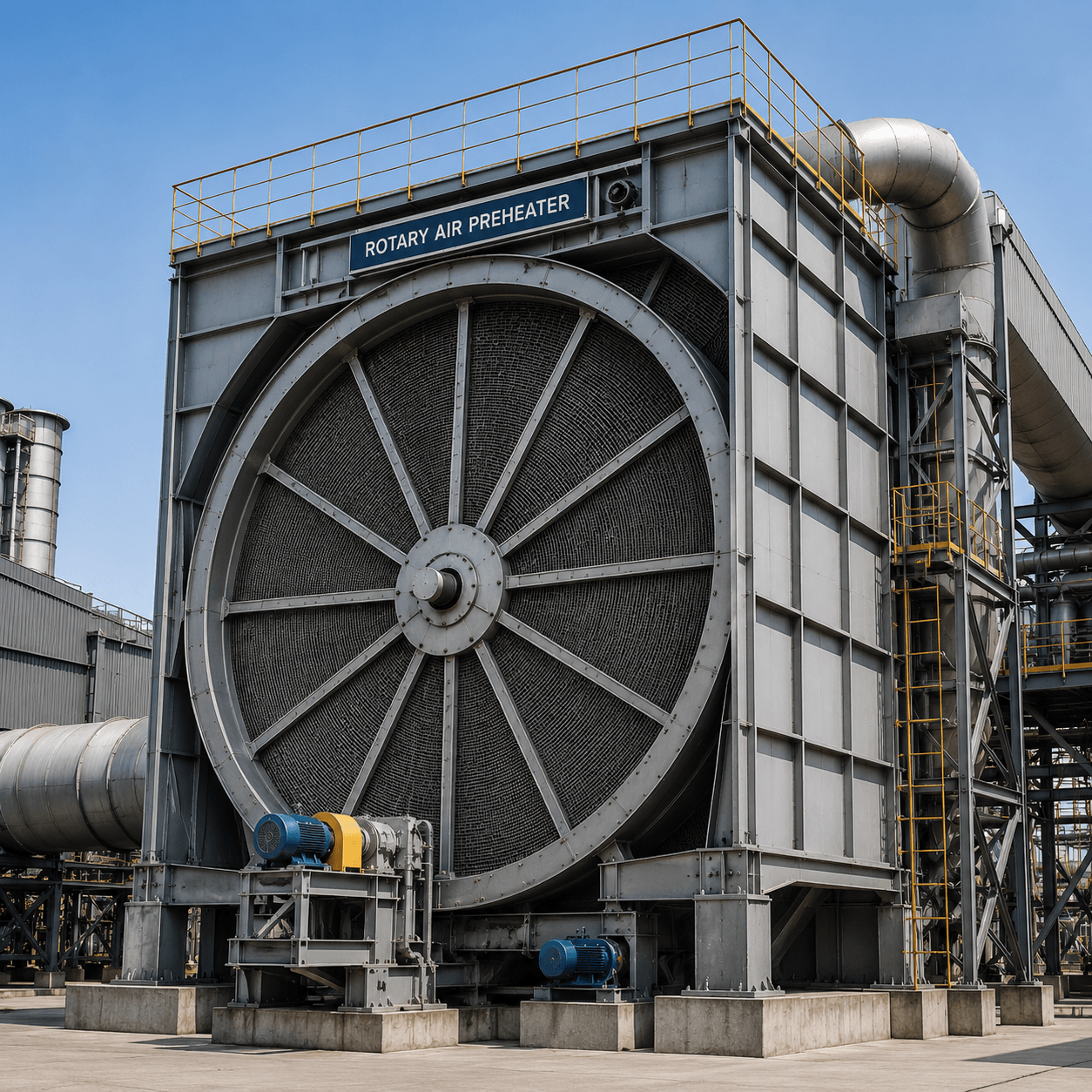
Rotary Air Pre Heater
A regenerative or rotary air preheater uses rotating heat-transfer surfaces to transfer heat between exhaust gas and incoming air. It is generally suited to larger installations where high heat recovery is required, including power-generation applications.
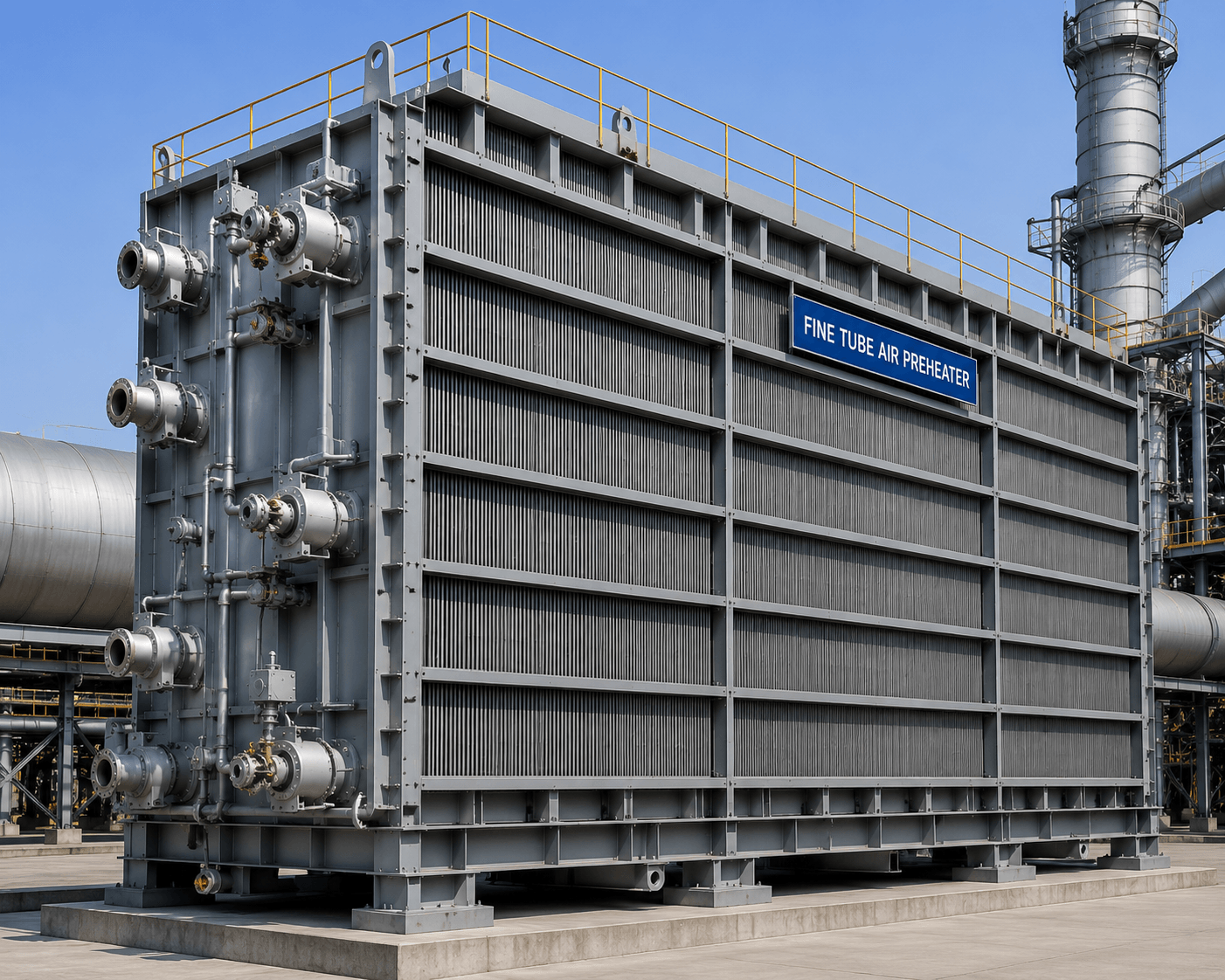
Finned Tube Air Pre Heater
A finned tube air preheater uses extended heat-transfer surfaces to improve heat exchange within a compact arrangement. It can be selected where enhanced heat transfer and space-efficient construction are important.
Key Benefits of Air Pre Heater Systems
Preheated combustion air can support efficient combustion under suitable operating conditions.
Heat recovery can reduce the amount of additional energy required to bring combustion air to the desired temperature.
Supports improved overall thermal performance of boilers and furnaces.
Makes productive use of heat available in exhaust gases.
Can reduce flue-gas temperature leaving the heat-recovery system.
Heat recovery can contribute to lower fuel or energy consumption depending on system conditions.
Suitable configurations can provide effective heat transfer within available plant space.
The system can be designed according to actual boiler, furnace and process conditions.
How to Select the Right Air Pre Heater?
Selection should be based on the actual operating conditions of the boiler or furnace. Important factors include:
- Flue-gas flow rate
- Combustion-air flow rate
- Flue-gas temperature
- Required air outlet temperature
- Fuel type
- Boiler or furnace capacity
- Heat-recovery requirement
- Gas composition and corrosion conditions
- Pressure drop
- Available installation space
- Maintenance requirements
Customized Air Pre Heater Solutions
Industrial heating systems have different operating conditions and space requirements. For this reason, custom air pre heater solutions can be designed according to the boiler capacity, heat-recovery requirement, airflow, flue-gas conditions, and plant layout.
Elenor Engineering states that its Air Pre Heater systems are custom-built and supported through design, manufacturing, installation, and maintenance services.

Applications
- Industrial Boilers
- Thermal Power Plants
- Cement Plants
- Steel & Metal Industries
- Chemical & Process Industries
- Oil & Gas Facilities
- Manufacturing Plants
Frequently Asked Questions
What is an Air Pre Heater?
An Air Pre Heater is a heat exchanger that recovers heat from hot flue gases and transfers it to incoming combustion air before it enters a boiler or furnace.
What is the main purpose of an Air Pre Heater?
Its main purpose is to recover waste heat, preheat combustion air, improve combustion efficiency, and reduce fuel and energy losses.
Does an Air Pre Heater reduce fuel consumption?
It can reduce fuel consumption by recovering waste heat and supplying hotter combustion air to the furnace. The actual reduction depends on the system design and operating conditions.
Where are Air Pre Heaters used?
Air preheaters are used in industrial boilers, thermal power plants, cement plants, steel and metal industries, chemical plants, oil and gas facilities, and other process industries.
What are the main types of Air Pre Heaters?
Common types include tubular/recuperative, rotary/regenerative, and finned tube air preheaters.
Can an Air Pre Heater be customized?
Yes. The design can be adapted to factors such as boiler capacity, flue-gas flow, combustion-air requirement, operating temperature, available space, and heat-recovery objectives.
Why is heat recovery important in boiler systems?
Recovering heat from flue gases allows part of the energy that would otherwise leave through the exhaust to be reused for combustion-air preheating, supporting better thermal efficiency.